How to Start a Poultry Business
A beginner’s guide to turning feed, feathers and focus into a thriving farm business.
How do you start a poultry business?
To start a poultry business, choose the type of poultry farming (broilers, layers or breeding), research your market, calculate your startup costs, prepare suitable housing, learn day-old chick care, understand feeding and nutrition, put disease prevention and biosecurity in place, and plan how you will sell your birds or eggs. Each step is explained below.
Poultry farming is a business opportunity that attracts many people interested in agriculture, food production, and entrepreneurship.
Whether you want to raise chickens for meat or eggs, it can be a business worth exploring. But it takes more than buying chicks and feeding them until they grow. Proper planning, knowledge of poultry management, disease prevention, and an understanding of your market are essential.
If you’re considering starting a poultry business but don’t know where to begin, here are eight important things to understand.
Step 1: Choose the Type of Poultry Business You Want to Start
Before investing your money, decide what type of poultry farming you want to venture into.
Your choice will depend on your interests, available resources, market demand, and the type of poultry business you want to operate.
Step 2: Research Your Market
Before buying birds, identify potential customers for your poultry products.
Your customers may include households, restaurants, hotels, food vendors, market traders, retailers, and other businesses that purchase chicken or eggs.
Research the demand in your area, the prices buyers are willing to pay, and the competition you may face. Knowing where you intend to sell before production begins helps you make better business decisions.
Step 3: Calculate Your Startup Costs
Starting a poultry business requires financial planning. Your expenses will depend on the size of your farm and the type of production you choose. Consider:
Remember that you need sufficient funds not only to start, but also to sustain the birds throughout their production cycle.
Step 4: Prepare Suitable Poultry Housing
Your poultry house should provide a suitable environment for the birds to grow and remain healthy. Proper ventilation, adequate space, temperature management, cleanliness, and protection from harsh weather are important considerations.
Overcrowding, poor ventilation, and unhygienic conditions can negatively affect bird health and increase the risk of disease. Before bringing your chicks to the farm, make sure the housing and necessary equipment are properly prepared.
Step 5: Learn How to Care for Day-Old Chicks
The early stages of a chick’s life are particularly important, especially during the brooding period.
New poultry farmers need to understand how to prepare the brooding area, provide appropriate warmth, ensure access to clean water and feed, and monitor chicks for signs of distress. Proper chick management from the beginning can help reduce avoidable losses and support healthy development.
Step 6: Understand Feeding and Nutrition
Feed is one of the major expenses in poultry production. Birds require appropriate nutrition depending on their age, type, and production purpose.
Farmers must understand feeding requirements, feed quality, water supply, and how to minimise feed wastage. Poor feeding practices can affect growth, health, productivity, and the overall profitability of the business.
Step 7: Prioritise Disease Prevention and Biosecurity
Disease outbreaks can result in significant losses for poultry farmers, so prevention should be an important part of your farm management plan.
Basic biosecurity practices include maintaining cleanliness, restricting unnecessary visitors, disinfecting equipment appropriately, monitoring birds for signs of illness, and following recommended vaccination programmes with veterinary guidance.
Learning to recognise potential health problems early, and seeking professional advice when necessary, can help protect your flock.
Step 8: Know How You Will Sell Your Products
Producing healthy birds is only one part of running a poultry business. You also need a plan for selling them.
Identify potential buyers, understand their requirements, research market prices, and consider how you will transport and deliver your products. Building relationships with buyers before your birds are ready for sale helps you prepare for the marketing stage.
Poultry Business FAQs
What type of poultry business can I start?
You can start broiler farming (birds raised for meat), layer farming (birds raised for eggs), or poultry breeding (producing chicks for sale to other poultry farmers). Your choice depends on your interests, available resources and market demand.
How much does it cost to start a poultry business?
Your costs depend on the size of your farm and the type of production. Expenses to plan for include poultry housing, chicks, feed, feeders and drinkers, brooding equipment, bedding, vaccination and veterinary care, water and electricity, labour, transportation, and cleaning and biosecurity supplies. You need enough funds to sustain the birds throughout the whole production cycle, not just to start.
Who buys poultry products?
Typical buyers include households, restaurants, hotels, food vendors, market traders, retailers and other businesses that purchase chicken or eggs. Research demand, prices and competition in your area before you buy birds.
How do I prevent disease in my poultry farm?
Maintain cleanliness, restrict unnecessary visitors, disinfect equipment appropriately, monitor birds for signs of illness, and follow recommended vaccination programmes with veterinary guidance. Recognising health problems early and seeking professional advice helps protect your flock.
Where can I learn poultry management?
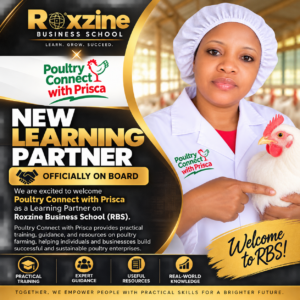
Poultry Connect With Prisca offers poultry management training on Roxzine Business School, covering chick care, brooding, biosecurity, ventilation, feeding, organic remedies, overcrowding and raising healthy birds towards market size. It suits beginners and existing farmers. View the Poultry Connect With Prisca profile
Learn Poultry Management With Poultry Connect With Prisca
If you’re interested in starting a poultry business, acquiring practical knowledge before investing your money can help you prepare for the challenges of poultry farming.
Poultry Connect With Prisca offers poultry management training covering chick care, brooding, biosecurity, ventilation, feeding, organic remedies, overcrowding, and raising healthy birds towards market size.
The training is suitable for beginners as well as existing farmers looking to improve their poultry management knowledge.
Final Thoughts
Starting a poultry business requires preparation, knowledge, patience, and proper management. Understanding the type of poultry farming you want to pursue, your startup expenses, feeding requirements, disease prevention, and market opportunities can help you make more informed decisions.
Before investing in poultry farming, take the time to learn the business. The more prepared you are, the better equipped you will be to navigate the challenges of poultry production.